
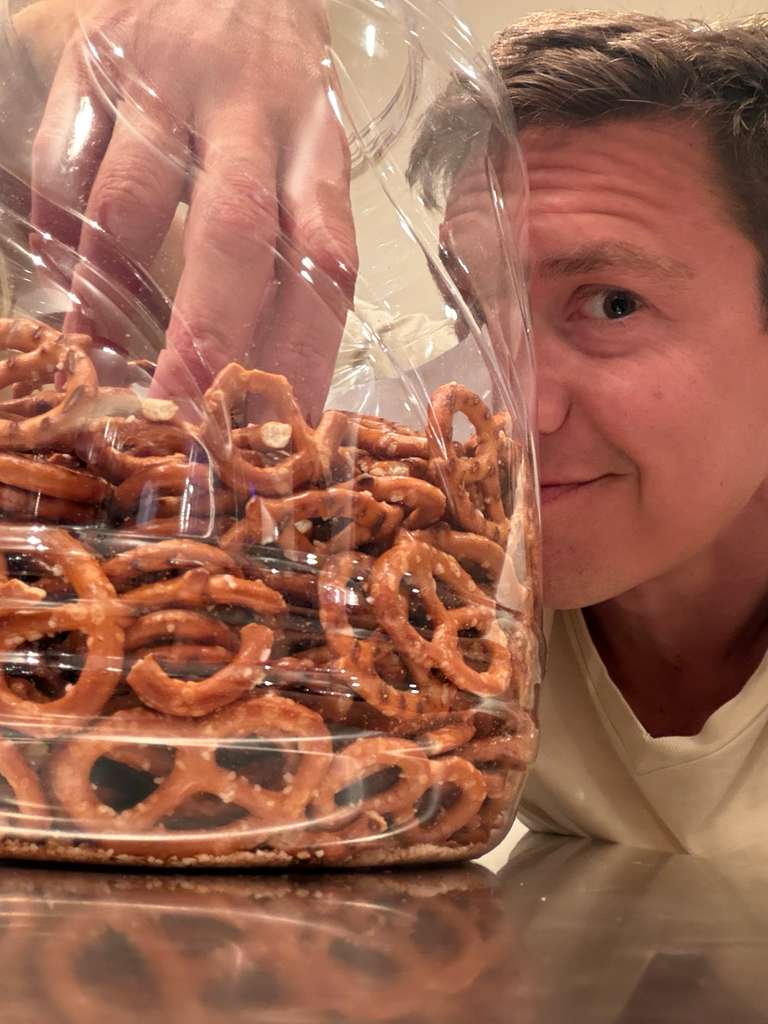
You finish a long day of work, deal with another problem at home, finally sit down and suddenly you are looking for something to eat.
Maybe it is chips. Maybe chocolate. Maybe leftovers from dinner. Maybe you find yourself standing in the kitchen long after you were physically hungry.
The frustrating part is that you may know exactly what is happening while it is happening. You are not necessarily hungry. A part of you is trying to hit the “off” switch from a stressful day and reaching for food because it’s the only tool it knows how to use.
For many years, I was that man: rushing though my day, getting everything done for everyone, thinking I was eating well (if I even stopped for lunch—often I didn’t!) only to end up shoveling more food into my body at night. It was those moments, alone before bed, eating whatever would give me a moment of satisfaction, that I learned (the hard way) how food gets connected with relief, reward, distraction and comfort.
A systematic review and meta-analysis of stress and eating behavior found a small overall association between stress and increased food intake, alongside a shift towards less healthy food choices. The effects varied substantially between people, which is important: stress does not make everyone eat in the same way.
This article looks at stress eating in men, why it happens, how to recognise your own triggers and how to begin changing the pattern without treating every craving as a failure of willpower.
Quick Answer: Why Do Men Stress Eat?
Stress eating happens when eating becomes connected with managing pressure, discomfort, fatigue or unmet desires rather than responding to genuine physical hunger. Work pressure, relationship tension, boredom, sleep loss, irregular meals and learned routines can all contribute. Some people eat more when stressed, while others eat less, so the useful question is not simply “Why can’t I break this pattern?” but “What in my life is fueling the need to eat when I’m not really hungry?”
What Is Stress Eating?
Stress eating means eating in response to stress or pressure rather than primarily because your body needs food. It can show up in the following ways (to name a few):
- Automatic snacking while working,
- Eating after an argument,
- Grazing through a stressful afternoon,
- Reaching for food late at night,
- Using food as a reward after a difficult day.
Stress eating itself is not a formal medical diagnosis. A review of stress-related eating research noted that there are no established diagnostic criteria or single gold-standard measure for stress-related eating. It is better understood as a self-soothing behavioral pattern that overlaps with emotional eating, and, in some cases, disordered eating.
To be very clear: Eating for comfort is not automatically a problem. The concern is when food becomes one of the main or only reliable ways of managing pressure, or when the pattern causes distress or feels difficult to control. If your health is deteriorating because of unwanted eating habits, or you feel ashamed about the ways you eat, it’s important to seek help from a qualified professional.
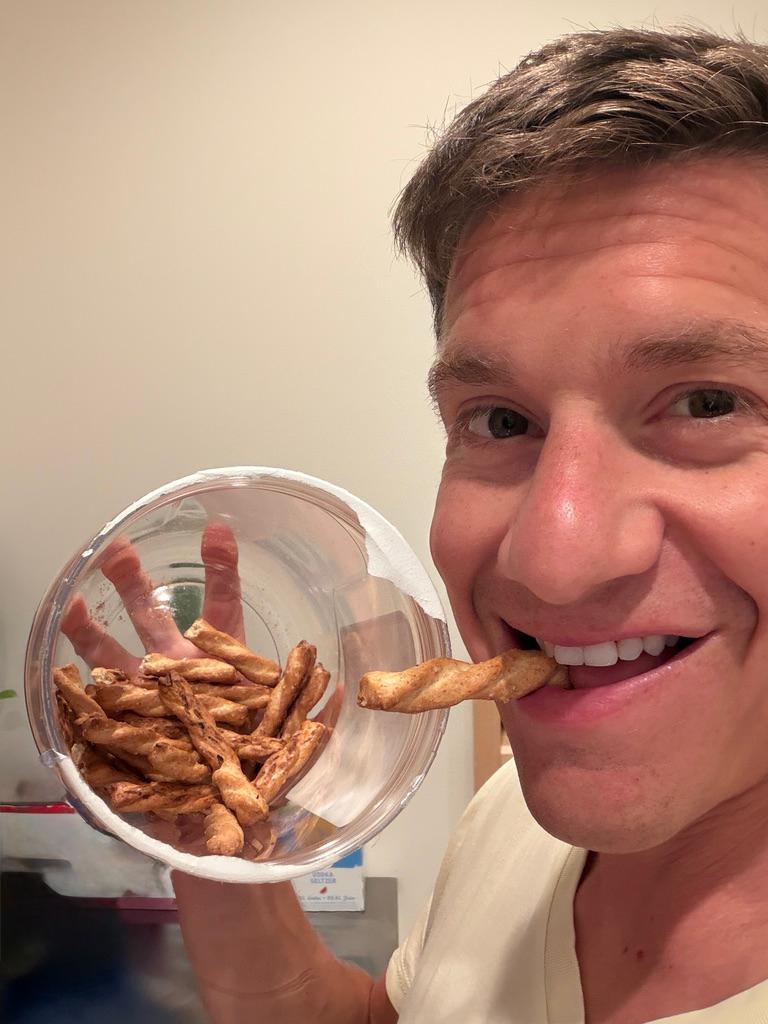
Is Stress Eating the Same as Emotional Eating?
They overlap, but they are not identical. Stress eating is usually tied specifically to stressors such as work deadlines, financial pressure, parenting demands, conflict or exhaustion. Emotional eating is broader and may involve sadness, loneliness, anger, boredom, anxiety or even positive emotions.
If you have worked through lunch and are ravenous at 8 p.m., physical hunger may be the primary reason you can’t seem to stop eating at night. But if the urge to eat appears immediately after conflict, emotional discomfort may be more central in driving the pattern. If you eat every night at the same time while watching television, habit and environment may be carrying the pattern. It’s important to notice the trigger.
The Mayo Clinic lists work stress, fatigue, relationship conflict, boredom and loneliness among common triggers for emotional eating, reinforcing the need to address the specific situation rather than treating every episode as the same problem. This is why personal coaching is so important—you can get tailored support for your exact pattern rather than generic wellness info.
Why Does Stress Make Some Men Want to Eat More?
Stress can affect your appetite and food choices, but the effect differs from one person to another. Some men lose their appetite during acute stress and then experience rebound hunger once it subsides. Others use food itself to regulate their nervous system and get out of a chronically stressed state.
Imagine spending ten hours answering emails, solving work problems and making decisions. You come home mentally drained. Your energy is shot and cooking feels like another task. Of course, something quick, familiar and rewarding becomes especially attractive. That is why “just use more willpower” is often too shallow an explanation when fatigue, hunger, convenience, and reward collide.
Don’t blame yourself if you’ve fallen into a bad pattern of using food to cope. Modern life is an enormous amount to manage. Chronic stress makes you more susceptible to the ultraprocessed world of “Food 2.0”: food that is irresistible, effortless, and endless. This is why I teach men how to upgrade their eating and get off the unhealthy path of least resistance.
What Are the Most Common Stress-Eating Triggers in Men?
There is no single trigger shared by every man, but they’re a few parts of you—Survival, Pleasure, Social, and Strategic—doing their jobs to keep you safe. The purpose of identifying them is not to label yourself; it is to make the behavior more predictable and therefore more workable.
1. Work Pressure and Mental Overload
Deadlines, difficult clients, financial responsibility, constant notifications and long working hours can turn eating into a quick transition out of work mode.
A common sequence is simple: difficult afternoon → finish work → open the fridge → snack → temporary relief. Repeat it enough times and the end of a stressful day becomes paired with food, even when physical hunger is modest.
A useful question is: “What am I expecting the food to do for me right now?” Relief? Reward? Stimulation? A break? The answer gives you something more specific to work with than self-criticism.
2. Fatigue and Poor Sleep
Tiredness can make planning, cooking and impulse control harder. It can also put you in the exact environments where automatic eating happens: the sofa, the television, the kitchen after everyone else has gone to bed. This is your Survival Eater showing up to manage the demands on your body, using food to solve an energy problem that might be caused by sleep deprivation.
If evenings are your difficult period, Jeff also has a separate guide on how to stop nighttime snacking. Keeping that topic in its own article prevents this page from drifting away from its main stress-eating intent.
It is also worth checking whether the sequence is really stress → skipped meal → exhaustion → intense hunger → easy food. Sometimes the problem begins earlier in the day.
3. Relationship and Family Stress
Conflict at home can create a strong eating trigger because the stress is emotionally close and difficult to escape. For men balancing work, marriage, parenting or caring responsibilities, food may become a private decompression tool or a way to smooth over difficult conversations. This is your Social Eater showing up to manage your relationships so you feel safe. Unfortunately, food can become a way to avoid an interpersonal difficulty. You may end up eating your feelings—or someone else’s—rather than feeling what needs to be felt.
Sometimes the better question to ask your Social Eater is: “What do I need from someone right now that I am trying to get through food?” Approval? Reassurance? Space? Connection?
4. Boredom, Loneliness or Emotional Discomfort
Stress eating does not always happen during dramatic events. It can appear during a quiet evening, a lonely hotel stay, a long drive or another night of scrolling. Food gives the mind something immediate to anticipate and experience. This is your Pleasure Eater showing up to soothe you when you’re feeling distressed.
The goal is not to eliminate every snack eaten while bored or shame your Pleasure Eater for wanting a treat. It is to recognise when the same emotional state repeatedly produces the same behavioral response and to work with that part in a clear and compassionate way.
5. Skipping Meals or Restricting Food Too Aggressively
Not every episode that feels emotional begins with emotion. Sometimes you are simply very hungry.
Men who work through lunch or restrict food aggressively during the day may arrive in the evening physiologically hungry and mentally depleted. Your Survival Eater won’t tolerate feeling deprived and will do whatever it can to restore energy balance. Mayo Clinic guidance on emotional eating cautions that excessive restriction can increase cravings and make emotional eating more difficult to manage.
Before deciding that the problem is psychological, ask: “When did I last eat a satisfying meal?” Sometimes the most useful intervention is lunch.
6. Environmental and Habitual Cues
Your environment teaches behaviour remarkably well. Television may cue snacks. A laptop may cue grazing. Driving home may cue takeaway. Finishing work may cue food or alcohol. Children going to bed may cue a kitchen visit. Your Strategic Eater is absent and the rest of your Inner Eater family is running on autopilot.
Jeff has explored this broader environmental influence in The 4 C’s That Control What You Eat, which looks at factors such as convenience, company and certainty in food choice.
When the pattern is less about a single food and more about a repeated routine, Habit Change Coaching for Men may be the more relevant service path.
7. Using Food as a Reward After a Hard Day
“I’ve had a horrible day. I deserve this.” I’ve heard many clients say something like this and it contains a useful clue. You may have learned to use food as the reward for surviving stress (or anything, for that matter). Plus, you may have very little pleasure in your day other than eating. This sets you up for over-relying on food rewards as the sole provider of pleasure, a job it was never meant to do.
Enjoying food is not the problem. The issue is when your Pleasure Eater tells you, “hard day = food reward” and this becomes automatic. You need to learn how to set appropriate boundaries and give your Pleasure Eater other reliable ways to get rewards and transition out of work pressure.
For example, if food signals that work is over, build another transition: a shower, a walk, music, training, a phone-free twenty minutes, or a proper meal instead of grazing. Realistic alternatives must preserve the reward without adding unwanted eating into your day.
How Can You Tell Physical Hunger From Stress Eating?
Physical hunger usually reflects your body’s need for food; a stress-driven urge is more closely tied to a situation, emotion or learned cue. There is no perfect diagnostic test, but a short comparison can help you pause and investigate.
| Physical hunger | Stress-driven urge |
| Often builds gradually | May feel sudden |
| A range of foods may sound appealing | May focus on a specific comfort food |
| Eating enough usually reduces hunger | The urge may continue despite fullness |
| Linked strongly with time since eating | Often linked with an event, thought or feeling |
| Physical sensations may be noticeable | Emotional tension may be more noticeable |
Do not use the table to prove that you are “not allowed” to eat. If you are hungry, eat. If you are stressed and hungry, both things can be true.
How Do You Stop Stress Eating Without Relying on Willpower?
The most practical approach is to create a mindful pause, identify the Inner Eater, and experiment with an alternative response. Trying to eliminate cravings is rarely a useful goal. The aim is to regain your ability to choose so you can change what happens next.
Step 1: Create a Short Pause
You do not need a twenty-minute meditation. Try sixty seconds. Stand up. Take a few slower breaths. Then ask, “What part of myself am I actually responding to?” The purpose is not to suppress the feeling; it is to make the next action conscious again.
Step 2: Identify the Inner Eater
For one week, note two things: Which part of me—Survival, Pleasure, Social, or Strategic—wanted to eat? What happened immediately beforehand? You are collecting behavioral information, not building a case against yourself.
Step 3: Get Curious: Do I Need Food?
When did you last eat? Was it satisfying? Are there physical signs of hunger? If the answer is yes, eating may be entirely appropriate. Under-eating through the day and then blaming yourself for evening hunger makes the pattern harder to understand.
Step 4: Appreciate the Need Underneath the Urge
- Hungry → eat.
- Tired → rest may matter.
- Isolated → connection may matter.
- Overstimulated → quiet may matter.
- Angry → the unresolved conflict may matter.
- Bored → engagement may matter.
- Overworked → a boundary may matter.
Each Inner Eater is running survival strategy to help you get your needs met. Sometimes, food is part of your evening, but it does not have to carry every emotional job.
Step 5: Make the Environment Easier
Move snack foods away from your desk, avoid eating straight from large packets, plan what you will eat after work, and create a clear transition between work and home. An intentional environment makes it more likely all your Inner Eaters can get their needs met without one stealing the show.
Step 6: Track Patterns, Not Individual Failures
A simple log – time → situation → hunger → emotion → food → what happened afterwards – can reveal patterns that memory misses. NIDDK guidance on changing habits similarly emphasizes that behavior change is a process, and that tracking progress can help identify roadblocks and setbacks without treating them as failure.
Step 7: Experiment with Alternatives (That You Can Actually Repeat)
Many alternatives fail because they do not perform the same function as the old behavior. If eating gives comfort, “drink water” may not be enough. If eating signals that work is finished, you need another transition. If it gives you ten minutes away from family demands, you may need ten minutes of protected space.
Understand the function of your Inner Eater → try another response → see how that part of you responds → refine and repeat it until the alternative becomes easier.
What If You Know Your Stress-Eating Triggers but Still Cannot Change Them?
Awareness is necessary, but it alone does not always change an established behavior. Your routine may be deeply automatic, many life stressors persist, food may be serving several functions at once, or the environment may keep reinforcing the old response.
In coaching, we will build your awareness of why you eat the way you do first. Then we will take action. The structured support of a coaching relationship can help you move from recognising the pattern to changing it.
Jeff’s coaching focuses on understanding the parts of you that want to eat then building practical systems that creating behaviors that can survive your work, travel and family pressure.
Primary service: Stress Eating Coaching for Men
Book a Free Discovery Call to discuss what is happening and whether coaching is a suitable next step.
Not Ready for Coaching? What Is the Best First Step?
If you are interested but not ready to book a call, use a lower-friction tool to understand the pattern first.
The Inner Eaters Quiz is designed to help you reflect on what may be driving your food choices and which eating pattern shows up most strongly.
If you want a practical starting point, try Jeff’s Five-Day Eating Reset, which focuses on using eating struggles as useful data, identifying patterns and building more flexible consistency.
When Should Stress Eating Be Discussed With a Health Professional?
Professional assessment is important when eating repeatedly feels out of control, causes substantial distress or appears alongside signs of an eating disorder or another health concern. Coaching can support habits and behavior change, but it is not a substitute for medical treatment, psychotherapy or specialist eating-disorder care.
- Repeated binge-eating episodes or a sense of losing control around food.
- Significant shame, distress or fear around eating.
- Vomiting, fasting or other compensatory behaviors.
- Major unexplained weight or health changes.
- Eating difficulties strongly linked with depression, anxiety or another mental-health concern.
The Mayo Clinic advises seeking professional help when emotional eating feels difficult to control and notes that therapy may help identify whether an eating disorder or another underlying concern is involved.
Frequently Asked Questions About Stress Eating in Men
Why do I eat when I’m stressed even if I’m not hungry?
Food can provide temporary comfort, distraction or reward, and repeated pairing of stress with eating can turn the response into a learned habit. The first useful step is to stop fighting yourself and get curious. Identify what happens immediately before the urge, then separate physical hunger from the situation or emotion that triggered the behavior. You’re more than your hunger or your behavior.
Why do I crave highly palatable food after a stressful day?
Stress, fatigue, convenience and learned reward patterns can all influence food choice. Chronically elevated cortisol can also nudge you towards highly refined carbohydrates that offer a quick reward. A craving does not prove that your body specifically needs one food; it may reflect the combination of depleted attention, hunger, environmental cues (i.e. ads,) and a familiar association between certain foods and relief.
Is stress eating the same as emotional eating?
Not completely. Stress eating specifically connects eating with stress or pressure. Emotional eating is broader and can involve sadness, loneliness, anger, boredom or other emotions. In everyday life the two frequently overlap, but identifying the actual trigger gives you a better chance of changing the pattern.
How can I stop eating after a stressful day?
Start by asking what function the eating serves—what Inner Eater is driving you? If you are physically hungry, eat a satisfying meal. If the urge mainly represents decompression, reward or habit, build another repeatable transition between work and evening instead of relying only on resistance.
Can changing diets help with stress eating?
Yes, especially when the eating occurs with predictable foods. Changing environmental cues, meal timing and the food available to you can make the response less automatic. Food 2.0—an environment of ultraprocessed convenience—makes it easy to stress eat. The goal is to recognize what you’re up against and build a response that still works during stressful weeks, not only when motivation is high.
Can coaching help with stress eating?
Coaching may be useful when the main challenge involves habits, routines, accountability and behavior change. If eating involves recurrent bingeing, significant psychological distress or symptoms of an eating disorder, medical or mental-health assessment may be more appropriate.
Breaking the Cycle Starts With Understanding the Pattern
Stress eating is rarely explained by one thing. For one man, the trigger may be work pressure. For another, loneliness. For someone else, the sequence may begin with skipping lunch, becoming exhausted and arriving home extremely hungry.
The useful question is not simply “How do I stop eating when I’m stressed?” It is “What pattern keeps leading me here?” Once you can see the trigger, the environment and the function food is serving, you have something specific to change.
If you want personalised support, explore Stress Eating Coaching for Men or Book a Free Discovery Call.
Sources and Further Reading
- Hill D, et al. Stress and eating behaviours in healthy adults: a systematic review and meta-analysis.
- Epel E, et al. Identifying stress-related eating in behavioural research: a review.
- Mayo Clinic. Weight loss: Gain control of emotional eating.
- Harvard Health Publishing. How to curb your stress eating.
- NIDDK. Changing Your Habits for Better Health.
